
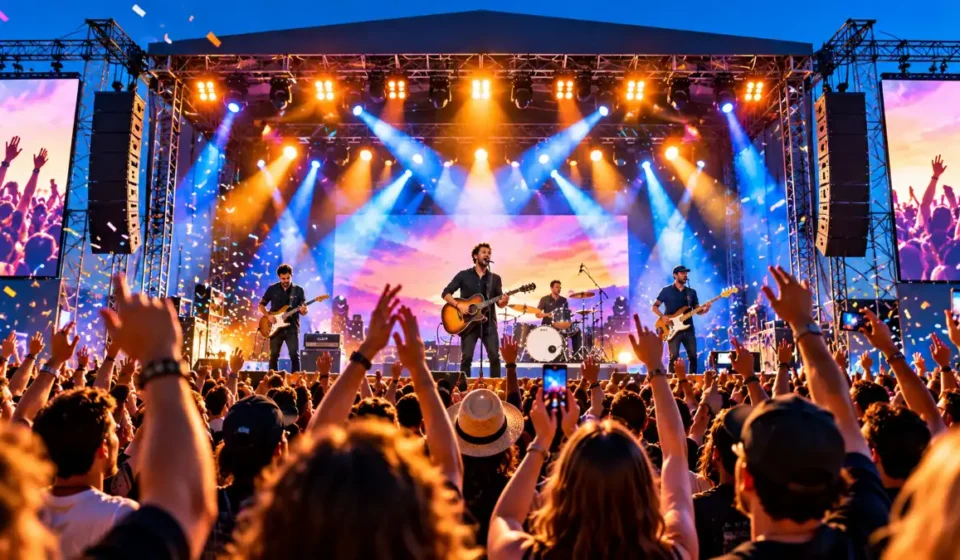

Concerts are live music events where singers, bands, DJs, and orchestras perform for audiences in stadiums, arenas, theaters, clubs, and outdoor venues. Concerts include pop, rock, hip-hop, jazz, classical, electronic, and acoustic performances. To find upcoming concerts, check official artist tour schedules, local venue calendars, or platforms such as BookMyShow, Ticketmaster, and Bandsintown. Ticket prices depend on the artist, venue, seating category, and demand. Before attending, verify the concert date and location, purchase tickets through an authorized seller, compare seating options, review refund policies, and prepare for transportation, security, and hearing safety.
Whether you’re planning your first live music experience or looking for your favorite artist’s next performance, this guide explains how concerts work, where to find upcoming events, how to buy tickets safely, and what to expect at the venue.
What Are Concerts?
A concert is an organized live musical performance featuring one or more artists. Performers may include solo singers, instrumentalists, bands, orchestras, choirs, and DJs.
Unlike recorded music, concerts allow audiences to experience songs performed in real time. Musicians may change arrangements, interact with fans, or perform material that differs from their studio recordings.
Concerts range from intimate acoustic performances in small clubs to large stadium shows featuring sophisticated lighting, sound systems, video displays, and theatrical effects.
The experience depends on the musical genre, artist, venue layout, and audience.
Different Types of Concerts
Live music events cover many musical styles. Understanding the differences can help audiences select performances that match their interests.
1. Pop Concerts
Pop concerts feature popular singers and groups performing well-known songs. They frequently include choreography, colorful lighting, costumes, and elaborate stage production.
2. Rock Concerts
Rock concerts emphasize electric guitars, drums, bass, and powerful vocals. Guitar solos, energetic performances, and audience participation are common.
3. Classical Music Concerts
Classical concerts feature orchestras, chamber ensembles, choirs, and solo instrumentalists. These events often take place in concert halls and emphasize musical interpretation.
4. Electronic Dance Music Concerts
EDM concerts feature DJs and electronic musicians performing live sets. Dance-oriented music, lighting effects, and visual displays are central to many performances.
5. Jazz and Acoustic Concerts
Jazz concerts emphasize improvisation and instrumental interaction. Acoustic concerts generally use instruments such as guitars and pianos with relatively simple production.
6. Hip-Hop and Rap Concerts
Hip-hop concerts feature rappers, DJs, and sometimes live bands. Performances often involve audience interaction, energetic vocals, and stage effects.
How to Find Upcoming Concerts Near You
Finding upcoming concerts is easier when you search by artist, city, date, or musical genre.
Official artist websites, venue calendars, and established ticketing platforms help audiences discover announced performances.
Read Also: Green Day Super Bowl 2026: Full Performance, Setlist, Highlights, and Controversy
Best Websites to Find Concerts
| Platform | Main purpose |
| BookMyShow | Discover music events and concerts in India |
| Ticketmaster | Find concerts and tickets in supported markets |
| Bandsintown | Discover nearby concerts and track artists |
| Songkick | Find upcoming tours and performances |
| Live Nation | Explore promoted concerts and tours |
These services provide regularly changing listings rather than a permanent concert schedule.
How to Search for Concerts by City and Date
- Open a concert discovery platform.
- Select your city or preferred location.
- Search for an artist or musical genre.
- Apply available date filters.
- Compare event locations and ticket options.
- Confirm the details through an official event page.
For example, someone interested in rock concerts can select their city, filter by genre, and compare available performances.
Important: A concert appearing in search results does not guarantee that tickets are still available. Always verify the booking status before making plans.
How to Verify Concert Information Before Booking
Not every concert announcement is equally reliable. Before purchasing tickets, compare the event details with the artist’s official website, venue calendar, or authorized ticketing partner.
Verify the following information:
| Information | What to check |
| Artist or band | Confirm the official performer announcement |
| Concert date | Verify the announced day and time |
| Venue | Check the complete address and city |
| Organizer | Identify the official promoter or event organizer |
| Ticket seller | Follow the authorized booking link |
| Availability | Confirm whether tickets are currently on sale |
| Refund policy | Review cancellation and rescheduling conditions |
Be cautious of unofficial social media advertisements, suspicious payment requests, and screenshots without links to the organizer.
If an event is postponed or canceled, follow announcements from the original ticket provider or organizer.
How to Buy Concert Tickets Online
Concert tickets are commonly available through authorized websites, official venue box offices, and event organizers.
Step 1: Choose Your Concert
Confirm the artist, venue, performance date, and scheduled start time.
Step 2: Select an Authorized Seller
Use the booking link provided by the artist, venue, or official event organizer.
Avoid unknown sellers asking for payments through personal accounts.
Step 3: Choose a Ticket Category
Depending on the event, options may include general admission, reserved seating, premium seating, and VIP packages.
Step 4: Review the Final Price
Check service fees, taxes, processing charges, and other costs before payment.
Step 5: Complete Your Booking
Use an accepted payment method and save your confirmation.
Some events require mobile tickets through an official ticketing app. Review the entry instructions before arriving.
Concert Ticket Prices and Categories
Concert prices vary according to the artist, venue size, seating location, demand, and additional benefits.
| Ticket category | Typical features |
| General Admission | Entry to a designated standing or unreserved area |
| Reserved Seating | A specific assigned seat |
| Premium Seating | Desirable viewing locations |
| VIP Packages | May include merchandise, priority entry, or special experiences |
| Festival Passes | Admission to specified festival dates or sessions |
There is no universal price for concert tickets. A smaller local show may be less expensive than a major international stadium tour, but actual prices depend on the event.
When budgeting, include transportation, parking, accommodation, food, and other expenses.
How to Choose the Best Concert Seats
The best seat depends on your budget, preferred atmosphere, and venue layout.
Seats near the stage may provide a closer view of performers, while central sections often offer a balanced view of the stage and visual production.
Elevated seats can provide a broader perspective, particularly in large arenas and stadiums.
Standing areas may feel more energetic but can require attendees to remain on their feet for long periods.
Before purchasing, examine the official seating chart and any restricted-view notices.
Attendees requiring accessible seating should consult the venue’s accessibility guidance.
Practical Concert Planning: Three Common Situations
Different concert formats require different preparation.
Attending a Standing Concert
Check whether your general admission ticket provides access to a standing section or a designated area.
Wear comfortable shoes and allow enough time for entry procedures.
General admission does not automatically guarantee a front-row position. Viewing locations may depend on the venue layout, ticket conditions, and arrival procedures.
Choosing Between Budget and Premium Tickets
Compare more than the advertised ticket price.
Review seat location, sightlines, package benefits, service charges, and restricted-view information.
A more expensive ticket does not necessarily offer the best experience for every attendee.
Traveling to Another City for a Concert
Confirm the concert date, venue, organizer, and booking conditions before purchasing nonrefundable travel or accommodation.
Check transportation options near the venue and plan your journey home after the performance.
If the concert is rescheduled, travel providers may have different refund rules from the ticket seller.
What Happens During a Live Concert?
Concerts generally begin with ticket verification and security screening.
Some performances include opening artists before the main performer appears.
During the headline show, musicians perform a planned selection of songs known as a setlist.
Setlists may include popular hits, album tracks, acoustic arrangements, and cover songs.
Artists sometimes interact with fans, introduce band members, or share stories between performances.
Larger concerts may feature sophisticated lighting, video screens, special effects, and stage movements.
Some performances conclude with an encore, although this is not guaranteed.
How Long Does a Concert Usually Last?
Concert duration depends on the artist, venue, and event format.
Many headline performances last approximately 90 minutes to two hours, although shorter and longer shows are common.
Opening acts, intermissions, and additional performances can extend the total time spent at a venue.
Music festivals may continue throughout the day or across several days.
Always check the event organizer’s published schedule when planning transportation.
What to Bring to Your First Concert
Preparing essential items can make attending a concert more comfortable.
Useful items include:
- A valid concert ticket or required ticketing app
- Charged mobile phone
- Identification, when required
- Accepted payment method
- Comfortable footwear
- Weather-appropriate clothing
- Properly fitted earplugs
Check venue restrictions before carrying large bags, professional cameras, outside food, or water bottles.
If attending with friends, agree on a meeting point in case you become separated.
Plan your return transportation before the performance, particularly for late-night concerts.
Essential Concert Safety Tips
Concert safety matters in both indoor and outdoor venues.
Stay hydrated, avoid pushing through densely packed areas, and follow instructions from venue staff.
Locate emergency exits after entering the venue and keep your belongings secure.
If you feel faint, overheated, or unsafe, move away from the crowd when possible and seek assistance.
Protect Your Hearing at Concerts
Live music can expose audiences to potentially harmful noise levels.
According to the US Centers for Disease Control and Prevention, hearing risk depends on both sound intensity and exposure duration.
To reduce exposure, move farther from loud sound sources, take breaks from noisy environments, and wear suitable hearing protection.
Properly fitted earplugs can help reduce noise exposure during loud performances.
Concert Ticket Refunds and Cancellation Policies
Concerts may be canceled, postponed, or rescheduled because of illness, weather, production problems, or other circumstances.
Refund eligibility depends on the event organizer, ticket seller, and purchase conditions.
Canceled events may qualify for refunds, while postponed performances can have different rules.
For example, Ticketmaster’s Help Center provides official guidance about ticket refunds and exchanges for eligible events.
Before purchasing, review the refund, transfer, and resale policies.
Keep your booking confirmation and check official announcements if an event changes.
Concerts vs. Music Festivals
Although concerts and music festivals both feature live music, their formats differ.
| Feature | Concerts | Music festivals |
| Performers | Usually a main artist with possible supporting acts | Multiple artists |
| Duration | Often one evening | One or several days |
| Music selection | Generally focused on selected performers | May include several genres |
| Venue | Clubs, theaters, arenas, stadiums | Often larger outdoor sites |
| Experience | Focused on a headline performance | Multiple performances and activities |
Concerts may be preferable when you want to see a particular artist, while festivals offer opportunities to discover several performers.
Why Are Concerts So Popular?
Concerts provide musical experiences that recorded songs cannot fully reproduce.
Live instruments, vocals, audience reactions, and stage production create an atmosphere that differs from listening to music at home.
Fans can sing along, discover supporting artists, and share memorable moments with other attendees.
Concerts also allow musicians to connect directly with audiences and perform new material.
From small acoustic shows to major stadium performances, live music brings performers and audiences together through shared experiences.
Frequently Asked Questions About Concerts
1. What is a concert?
A concert is a live musical performance featuring singers, bands, DJs, orchestras, or other musicians performing for an audience.
2. How can I find upcoming concerts near me?
Use platforms such as BookMyShow, Ticketmaster, Bandsintown, or Songkick. Select your city or preferred dates, then confirm event information through official sources.
3. How much do concert tickets usually cost?
Concert ticket prices depend on the artist, venue, seating category, demand, and package benefits. Check an authorized seller for current pricing and additional fees.
4. What should I bring to a concert?
Bring your ticket, phone, required identification, accepted payment method, comfortable footwear, and hearing protection. Follow venue-specific restrictions.
5. Can concert tickets be refunded?
Refund eligibility depends on the ticket provider and organizer’s policies. Canceled, postponed, and rescheduled concerts may have different conditions.