
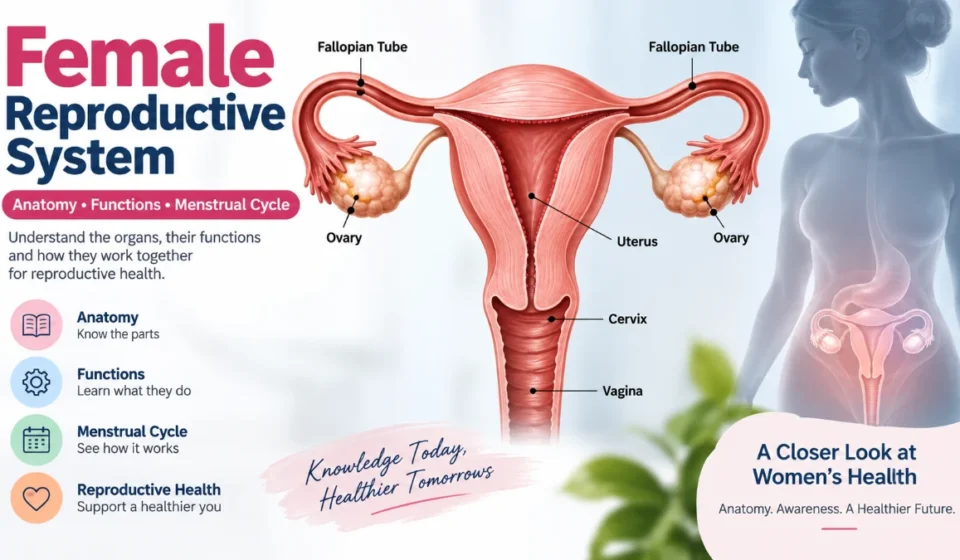

Maintaining female reproductive system health involves understanding normal biological changes, recognizing unusual symptoms, preventing certain infections, and obtaining appropriate healthcare.
The reproductive organs support menstruation, hormone production, sexual function, fertility, pregnancy, and childbirth. Conditions affecting these structures can cause menstrual irregularities, pelvic pain, abnormal bleeding, infections, or fertility difficulties.
Some disorders produce noticeable symptoms, while others remain undetected until a medical examination or fertility assessment.
Understanding the difference between expected physiological changes and potential warning signs can help individuals make informed healthcare decisions.
This guide explains common reproductive disorders, their symptoms, diagnostic approaches, preventive measures, and when to seek medical attention.
What Is Female Reproductive System Health?
Female reproductive system health refers to the physical and functional well-being of reproductive organs and the hormonal processes that regulate them.
It includes menstrual health, ovarian and uterine function, sexual health, fertility, infection prevention, cancer screening, and reproductive changes throughout life.
Good reproductive health does not require regular menstruation, pregnancy, or the ability to conceive.
Individual healthcare needs depend on age, anatomy, medical history, symptoms, and personal circumstances.
Understanding reproductive anatomy provides a useful foundation for identifying where different conditions develop.
For an overview of the organs and their locations, see the companion guide to female reproductive system anatomy.
Understanding Normal Reproductive Changes
The reproductive system changes naturally throughout life.
During puberty, hormonal activation stimulates reproductive development and the beginning of menstrual periods.
During reproductive adulthood, hormonal fluctuations influence ovulation and menstrual cycles.
Pregnancy produces substantial hormonal and anatomical adaptations.
Perimenopause involves increasingly variable ovarian activity, while menopause marks the permanent end of natural menstrual periods.
Some menstrual variation is expected, particularly during adolescence and perimenopause.
However, severe pain, unusually heavy bleeding, or symptoms that interfere with daily activities should not automatically be dismissed as normal.
Common Disorders Affecting the Female Reproductive System
Several conditions can affect reproductive anatomy, hormone regulation, and fertility.
1. Polycystic Ovary Syndrome (PCOS)
Polycystic ovary syndrome is a hormonal and metabolic condition that can affect ovulation.
Common features include irregular menstrual periods, elevated androgen levels, acne, and increased facial or body hair.
Some individuals experience difficulty conceiving because ovulation may occur irregularly.
PCOS can also be associated with insulin resistance and metabolic health concerns.
Not every person with PCOS has visibly polycystic ovaries.
Diagnosis requires consideration of symptoms, medical history, and appropriate investigations.
Treatment depends on individual concerns, including menstrual regulation, metabolic health, and fertility.
2. Endometriosis
Endometriosis occurs when tissue similar to the uterine lining grows outside the uterus.
It commonly affects pelvic tissues but can occur in other locations.
Symptoms may include severe menstrual pain, chronic pelvic pain, painful intercourse, heavy bleeding, and fertility difficulties.
Some individuals have few or no noticeable symptoms.
Endometriosis cannot always be diagnosed through symptoms alone.
Clinical assessment and imaging may support diagnosis, and surgery is not always required before treatment begins.
There is currently no definitive cure. Treatment focuses on symptom management and reducing the condition’s impact on daily life.
3. Uterine Fibroids
Uterine fibroids are generally benign growths that develop from the muscular tissue of the uterus.
Some people experience no symptoms.
Others may develop heavy menstrual bleeding, pelvic pressure, urinary frequency, or reproductive difficulties.
The effects depend partly on fibroid size, number, and location.
Evaluation commonly involves clinical assessment and pelvic ultrasound.
Treatment may include monitoring, medication, or procedures, depending on symptoms and individual circumstances.
4. Ovarian Cysts
Ovarian cysts are fluid-filled structures that develop within or on an ovary.
Many are functional cysts associated with normal ovarian activity.
These often resolve without treatment.
Other cysts may require monitoring or further investigation.
Symptoms can include pelvic discomfort, bloating, or pressure, although some cysts cause no symptoms.
Sudden severe pelvic pain may indicate complications such as ovarian torsion or cyst rupture and requires urgent medical assessment.
5. Pelvic Inflammatory Disease (PID)
Pelvic inflammatory disease involves infection and inflammation of the upper reproductive tract.
It may affect the uterus, fallopian tubes, and ovaries.
Untreated sexually transmitted infections, particularly chlamydia and gonorrhea, are important causes, although other bacteria can also contribute.
Possible symptoms include lower abdominal pain, abnormal vaginal discharge, fever, pain during intercourse, and bleeding between periods.
Some cases produce mild symptoms or no noticeable symptoms.
Early diagnosis and antibiotic treatment are important because untreated PID can increase the risk of infertility, ectopic pregnancy, and chronic pelvic pain.
Reproductive Health Conditions at a Glance
| Condition | Mainly affects | Possible symptoms | Common evaluation |
| PCOS | Ovarian and hormonal function | Irregular periods, acne, excess hair growth | History, laboratory tests, sometimes ultrasound |
| Endometriosis | Pelvic tissues | Painful periods, pelvic pain | Clinical assessment, imaging, sometimes surgery |
| Fibroids | Uterus | Heavy bleeding, pelvic pressure | Examination and ultrasound |
| Ovarian cysts | Ovaries | Pelvic discomfort or no symptoms | Ultrasound |
| PID | Upper reproductive tract | Pelvic pain, discharge, fever | Examination and infection testing |
These conditions can produce overlapping symptoms.
A diagnosis cannot reliably be established using a symptom checklist alone.
Read More: Female Reproductive System Health: Common Disorders, Symptoms, Prevention, and Care
Menstrual Health: What Is Normal and What Is Not?
Menstrual patterns provide useful information about reproductive function.
A menstrual cycle is counted from the first day of one period to the first day of the next.
The American College of Obstetricians and Gynecologists describes 21–35 days as the typical adult cycle range. Cycle patterns may be more variable during adolescence.
However, cycle length is only one aspect of menstrual health.
Bleeding volume, duration, pain, and changes from an individual’s usual pattern also matter.
Symptoms that warrant assessment include:
- Persistently irregular periods.
- Bleeding between periods.
- Unusually heavy menstrual bleeding.
- Severe menstrual pain.
- Bleeding after menopause.
- Missing periods without an established explanation.
Menstrual tracking can help document symptoms and identify changes.
However, tracking applications cannot independently diagnose hormonal or reproductive disorders.
Reproductive Tract Infections
Infections can affect the vulva, vagina, cervix, or upper reproductive tract.
Different infections have different causes and require different treatments.
Vaginal yeast infections
Yeast infections commonly involve excessive growth of Candida species.
Symptoms may include itching, irritation, redness, and changes in discharge.
Similar symptoms can occur with other conditions.
Persistent or recurrent symptoms should be evaluated rather than repeatedly treated without confirming the cause.
Bacterial vaginosis
Bacterial vaginosis involves an imbalance in the vaginal microbial community.
It may cause unusual discharge or a fishy odor.
Some individuals experience no symptoms.
Bacterial vaginosis is not simply classified as a sexually transmitted infection, although sexual activity can influence risk.
Sexually transmitted infections
Chlamydia, gonorrhea, human papillomavirus, and other infections can affect reproductive health.
Some infections are asymptomatic.
Appropriate screening, vaccination, barrier protection, and timely treatment can reduce certain risks.
Testing recommendations depend on individual risk factors and applicable healthcare guidelines.
Cervical Health and Cancer Prevention
The cervix is an important focus of preventive reproductive healthcare.
Persistent infection with certain high-risk human papillomavirus types can cause cellular changes that may eventually develop into cervical cancer.
HPV vaccination protects against several HPV types associated with cancer.
Cervical screening can identify high-risk HPV infection or abnormal cervical cells before cancer develops.
Screening methods include HPV testing and cervical cytology, commonly called a Pap test.
Recommendations vary according to country, age, medical history, and previous screening results.
HPV vaccination does not eliminate the need for recommended cervical screening.
Individuals should follow the screening schedule applicable to their circumstances.
Ovarian and Uterine Cancer Awareness
Some reproductive cancers can initially produce symptoms that resemble more common conditions.
Persistent abdominal bloating, pelvic discomfort, early fullness, or urinary changes may occur with ovarian cancer.
Abnormal uterine bleeding, particularly after menopause, can be a warning sign of endometrial cancer.
These symptoms have many possible causes and do not automatically indicate cancer.
Nevertheless, persistent or unexplained changes require medical assessment.
Routine ovarian cancer screening is not universally recommended for asymptomatic individuals at average risk.
People with a strong family history of certain cancers may benefit from individualized risk assessment and genetic counseling.
Everyday Practices That Support Reproductive Health
Maintaining reproductive health involves evidence-based care rather than complicated hygiene routines or unproven products.
1. Practice appropriate genital hygiene
The vulva can generally be cleaned gently with water and, if tolerated, a mild unscented cleanser externally.
The vagina has natural mechanisms that maintain its internal environment.
Internal washing or douching is unnecessary and can disrupt the vaginal microbial balance.
2. Consider safer sexual practices
Condoms and other barrier methods can reduce the risk of several sexually transmitted infections.
They do not provide complete protection against every infection.
Vaccination and appropriate screening provide additional protection.
3. Maintain general health
Balanced nutrition, adequate sleep, regular physical activity, and appropriate management of chronic conditions contribute to overall well-being.
These practices support health but cannot guarantee prevention of reproductive disorders.
4. Attend appropriate preventive healthcare visits
Healthcare visits provide opportunities to discuss menstrual concerns, contraception, fertility, screening, vaccination, and reproductive symptoms.
The frequency and type of examination should reflect individual needs.
5. Avoid repeatedly self-treating unexplained symptoms
Pelvic pain, abnormal discharge, and irregular bleeding can have several causes.
Repeated use of over-the-counter treatments without confirming the diagnosis may delay appropriate care.
Can Reproductive Health Conditions Affect Fertility?
Fertility depends on several biological factors.
These include ovulation, egg quality, sperm health, fallopian tube function, and uterine conditions.
Some reproductive disorders can interfere with one or more of these processes.
PCOS may affect ovulation.
Endometriosis can contribute to fertility difficulties.
Untreated pelvic inflammatory disease can damage fallopian tubes.
Certain fibroids may interfere with implantation or pregnancy, depending on their location.
However, having one of these conditions does not automatically mean a person is infertile.
Fertility evaluation may involve hormone testing, ultrasound, assessment of tubal function, and semen analysis when relevant.
Treatment depends on the underlying cause and individual reproductive goals.
When to Talk to a Healthcare Professional
Not every reproductive symptom requires emergency treatment, but persistent or unusual changes deserve appropriate assessment.
Arrange a medical consultation if you experience persistent pelvic pain, repeatedly irregular periods, unusually heavy or prolonged bleeding, bleeding between periods, recurrent abnormal vaginal discharge, pain during intercourse, persistent urinary or pelvic symptoms, difficulty becoming pregnant, or symptoms that repeatedly return after self-treatment.
A clinician can review your symptoms, medical history, and examination findings before recommending appropriate investigations.
Urgent Reproductive Health Warning Signs
Seek urgent medical assessment for:
- Sudden, severe pelvic or abdominal pain.
- Pelvic pain with fainting or significant dizziness.
- Heavy bleeding accompanied by weakness or lightheadedness.
- Severe pain or bleeding when pregnancy is possible.
- Fever accompanied by significant pelvic pain.
- Severe abdominal pain with shoulder pain or fainting.
These symptoms may indicate conditions such as ectopic pregnancy, ovarian torsion, significant bleeding, or serious infection.
A ruptured ectopic pregnancy can cause life-threatening internal bleeding and requires emergency treatment.
How Are Reproductive Disorders Diagnosed?
Diagnosis begins with a detailed medical history and assessment of symptoms.
A healthcare professional may ask about menstrual patterns, pain, medications, pregnancy possibility, sexual history, and family history.
Depending on the concern, investigations may include pregnancy testing, blood tests, pelvic ultrasound, infection testing, cervical screening, endometrial sampling, or additional imaging.
Not every patient requires every investigation.
Tests should be selected according to symptoms, examination findings, and clinical risk factors.
A person may also be referred to a gynecologist or another specialist when further assessment is necessary.
Frequently Asked Questions
What are the most common reproductive health problems?
Common concerns include menstrual disorders, PCOS, endometriosis, uterine fibroids, ovarian cysts, and reproductive tract infections.
Can reproductive disorders occur without symptoms?
Yes. Some conditions produce few symptoms and may be identified during examinations or investigations for other concerns.
Does irregular menstruation always indicate a disease?
No. Menstrual variation can occur for several reasons, but persistent or unexplained irregularity deserves assessment.
Can reproductive health problems be prevented?
Some risks can be reduced through vaccination, safer sexual practices, recommended screening, and timely treatment. However, not every reproductive condition is preventable.
How often should reproductive health screening be performed?
Screening frequency depends on age, medical history, sexual practices, previous results, and applicable clinical guidelines.
When should someone see a gynecologist?
A gynecological consultation may be appropriate for persistent pelvic symptoms, abnormal bleeding, menstrual concerns, fertility difficulties, or preventive care.
Can reproductive health conditions affect fertility?
Some conditions can affect ovulation, fallopian tube function, or the uterine environment. Their impact varies between individuals.
Is vaginal douching necessary?
No. The vagina maintains its internal environment naturally, and douching is generally discouraged.