
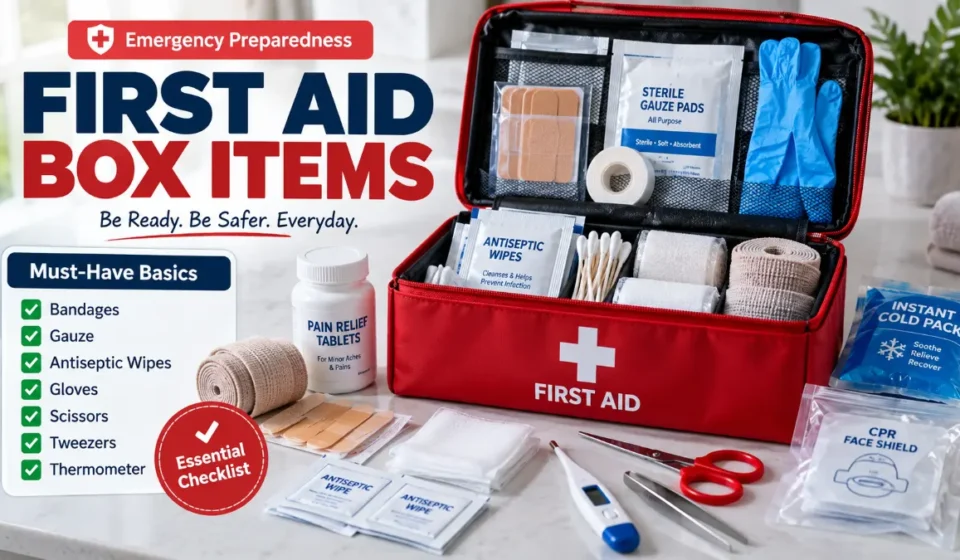

first aid box items Having a first aid kit does NOT mean you are ready for an emergency.
A box may have dozens of supplies, however those goods grow to be much less beneficial while they are hard to discover or destroyed or expired.
Now imagine if you’re on a minor cut or scrape, all you need to do is get some sterile gauze but the package was ripped open. Maybe the last pair of gloves have not been shed weeks ago and now, as in this case, a thermometer is no longer functional.
But many of these issues are avoidable with preventative organization and home maintenance practices.
Understanding the items of first aid box includes meaning what purpose their serve, storage requirement and when they are need to be replaced.
A good kit must have appropriate items on hand, maintain sterile packaging and include proper emergency contact details.
American Red Cross advises to examine first aid kits consistently and replace utilized or depleted supplies.
This guide on how to organize first aid supplies, manage inventory and common pitfalls of preparedness.
Why First Aid Kit Organization Matters
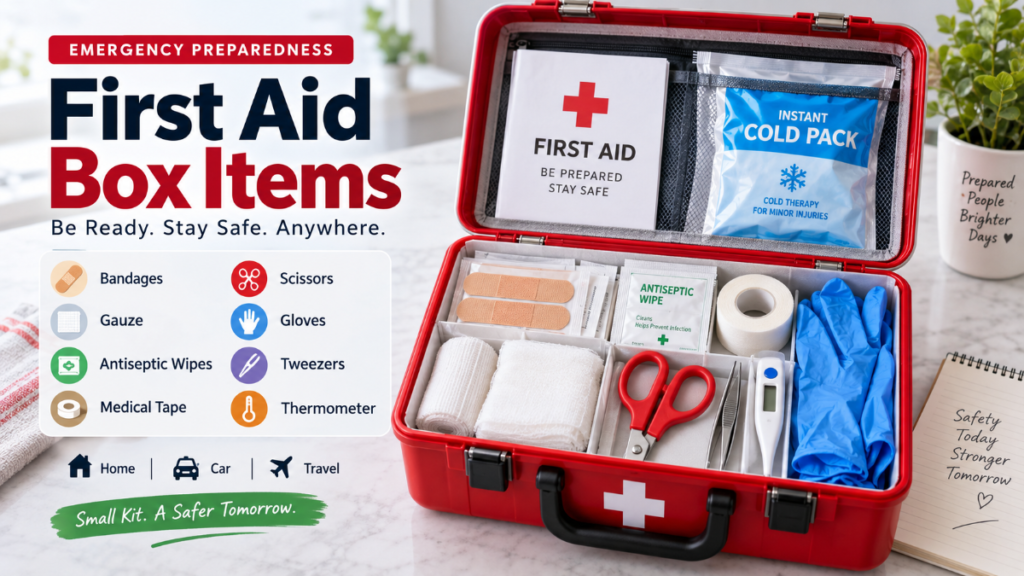
A disorganized first aid kit may contain appropriate supplies but still be difficult to use.
Important products can become buried beneath unnecessary equipment.
Expiration dates may be overlooked, and missing items may remain unnoticed.
Good organization helps users identify supplies, inspect their condition and replenish consumable products promptly.
The goal is to keep the kit accessible and ready for its intended purpose.
First Aid Box Items and Their Functions
| Item | Main function | Important precaution |
| Adhesive bandage | Covers minor wounds | Choose an appropriate size. |
| Sterile gauze | Covers wounds and absorbs fluid | Check packaging integrity. |
| Absorbent dressing | Supports bleeding control | Severe bleeding requires emergency help. |
| Medical tape | Secures dressings | Consider adhesive sensitivity. |
| Roller bandage | Holds dressings | Avoid excessive tightness. |
| Disposable gloves | Reduces bodily-fluid exposure | Use appropriate gloves. |
| Cold pack | Provides temporary cold therapy | Follow instructions. |
| Thermometer | Measures temperature | Maintain cleanliness and function. |
| Tweezers | Removes accessible superficial splinters | Avoid deep probing. |
| Emergency blanket | Provides temporary insulation | Does not replace medical care. |
Each item has a particular function.
A first aid kit should contain appropriate products rather than unnecessary equipment selected only to increase the advertised item count.
10 Essential Tips for First Aid Kit Safety and Maintenance
1. Organize Supplies by Category
Divide the container into clearly identified sections.
A practical system separates wound-care materials, protective equipment, basic tools and emergency information.
Transparent compartments may make supplies easier to find.
Keep commonly needed items accessible without having to empty the entire kit.
2. Create an Inventory Checklist
An inventory records the kit’s contents.
Include product names, quantities and expiration dates when applicable.
For example:
| Item | Example quantity | Inspection requirement |
| Adhesive bandages | 25 | Quantity and packaging |
| Sterile gauze pads | 10 | Seal and expiration |
| Nonlatex gloves | 2 pairs | Condition |
| Medical tape | 1 roll | Usability |
| Thermometer | 1 | Operation |
These quantities are examples, not a universal required inventory.
Update the checklist whenever supplies are added or removed.
Read More: How to Eat Coconut Cult
3. Protect Sterile Packaging
Sterile products should remain sealed until needed.
Inspect packaging for tears, moisture and damaged seals.
Do not assume that a product remains sterile when its packaging is compromised.
Replace unsuitable products promptly.
Avoid transferring sterile dressings into unsealed containers.
4. Store Medicines Safely
Medicines require different precautions from ordinary bandages.
Keep medication in original labeled packaging.
Follow temperature and storage instructions.
Avoid unidentified tablets or mixed medicines stored in unlabeled containers.
Keep medicines securely away from children.
The FDA explains that expired medicines can lose effectiveness and that unsuitable storage conditions can damage products before their expiration dates.
Some medicines require refrigeration or protection from high temperatures.
Follow individual product instructions.
5. Replace Supplies After Use
A first aid kit can become incomplete gradually.
Someone might use the last sterile dressing or pair of gloves without replacing it.
After every use, record which products were consumed.
Restock missing supplies promptly.
This helps ensure the kit remains ready.
6. Inspect Expiration Dates
Some medicines and medical products have printed expiration dates.
Inspect them regularly.
Replace products according to their labeling and relevant guidance.
Do not assume an expired medicine remains safe or effective.
Packaging integrity also matters, even before expiration.
7. Maintain Reusable Equipment
Reusable tools require separate inspection.
Check that the thermometer functions correctly.
Replace batteries as needed.
Inspect scissors and tweezers for damage.
Clean reusable equipment according to manufacturer instructions.
Replace equipment that cannot function properly.
8. Update Emergency Information
Emergency contact information can become outdated.
Review telephone numbers and relevant medical details regularly.
Include prescribed emergency instructions or important allergy information when appropriate.
Keep personal medical information secure.
9. Choose Suitable Storage Conditions
A first aid box should protect supplies from moisture, contamination and unsuitable temperatures.
Choose a durable container with a secure closure.
Avoid keeping temperature-sensitive medicines in hot vehicles or other unsuitable environments.
Follow each product’s storage instructions.
10. Understand the Limits of First Aid
A first aid kit cannot manage every injury or illness.
Severe bleeding, unconsciousness, breathing difficulties and other potentially life-threatening conditions require emergency assistance.
Contact emergency services and provide care within your training.
The AHA and Red Cross guidelines emphasize responder safety, timely emergency response and using appropriate first aid skills.
How to Organize First Aid Box Items Step by Step
A four-section system provides a practical starting point.
First Aid Kit Layout
Section 1
Bandages and wound dressings
Section 2
Protective equipment
Section 3
Basic tools and equipment
Section 4
Emergency information
Illustrative arrangement. Adjust it to the kit and store medicines securely according to their labeling.
The layout should make supplies easy to identify while protecting them from damage.
First Aid Items That Require Regular Checking?
Different supplies require different checks.
| Item | What to inspect |
| Adhesive bandages | Quantity and packaging |
| Sterile gauze | Seal and expiration |
| Disposable gloves | Tears and deterioration |
| Medical tape | Condition and usability |
| Medicines | Storage and expiration |
| Cold packs | Leakage and damage |
| Thermometer | Battery and operation |
| Contact card | Information accuracy |
A monthly inspection is a practical household option.
It is not a universal legal requirement.
Workplaces may need different inspection procedures based on applicable regulations and hazards.
First Aid Kit Maintenance Schedule
| When | Recommended action |
| After every use | Replace consumed supplies. |
| Monthly | Check quantities and condition. |
| Before travel | Review contents and personal requirements. |
| Before expiration | Replace relevant products. |
| After environmental damage | Inspect affected supplies. |
The Red Cross advises inspecting first aid kits regularly and replacing used or outdated products.
How to Create a Maintenance Log
A written maintenance log makes it easier to identify recurring problems.
| Inspection date | Problem | Action |
| Example | Gauze supply running low | Restock |
| Example | Thermometer battery weak | Replace battery |
| Example | Contact information outdated | Update card |
These entries demonstrate how a log can be structured. They are not records of actual inspections.
Store the log inside the kit or maintain a digital copy.
How to Recognize an Incomplete First Aid Kit
A kit may be incomplete when essential dressings, gloves, tools or emergency information are missing.
Check the remaining products for suitability.
Replace individual supplies when necessary rather than automatically replacing the entire container.
If the container is damaged or no longer protects the supplies, replace it.
Supplies That Should Not Be Stored Carelessly
Avoid keeping unidentified medicines, expired products, damaged sterile supplies or equipment that nobody is trained to use.
Do not share prescriptions.
Personalized emergency medicines should be stored according to the person’s treatment plan.
Common First Aid Storage Mistakes
Typical problems include inaccessible storage, excessive temperatures, damaged packaging and failure to restock supplies.
Another mistake is assuming everyone knows where the kit is located.
Responsible household members or designated workplace responders should know how to access the kit.
Frequently Asked Questions
What are first aid box items?
They are materials and appliances that used to deliver first aid in cases of injury or illness.
Organisation of the first aid kit.?
Break into sections for wound-care, protective equipment and tools / emergency information.
Do first aid supplies expire?
Some do. Always read Product Labels and Packagings
Is it OK to keep medicines in first aid box?
But only if you follow proper storage and safety requirements.
How often should you inspect a kit?
Check it regularly and when using. Monthly checks are a reasonable domestic practice.
How do you store dirty sterile gauze?
Replace it if the sterile packaging is broken.
What is the Use of Inventory Checklist?
So it helps to spot anything missing, damaged and expired.
Storing a first aid box in your car?
Although many of the basic to choice might, medication and temperature delicate items require some consideration.
Who should know where the kit is?
Household members and designated work site responders should be aware of where it is located.
Do first aid supplies replace medical treatment?
A: Nope, very serious wounds and life-threatening conditions require professional medical help.