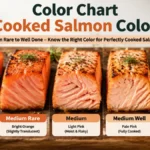
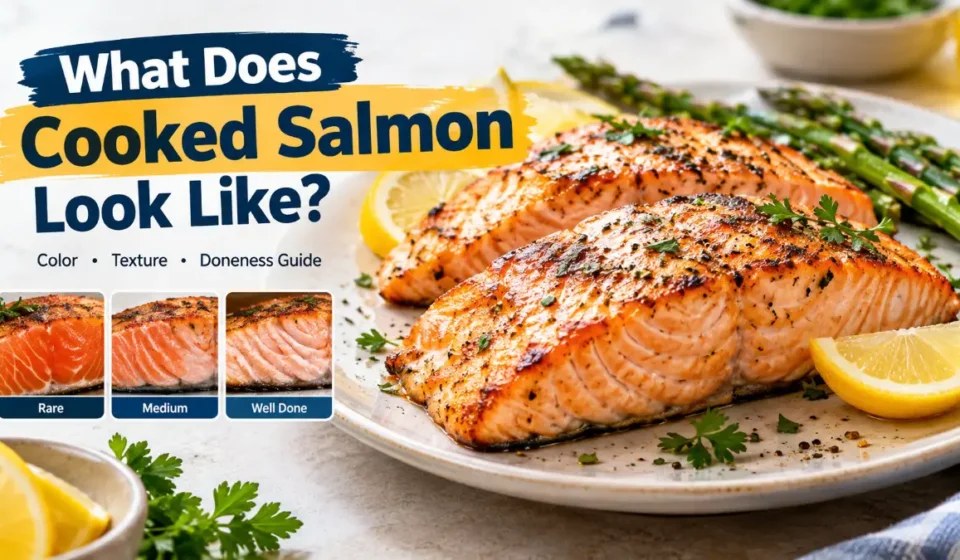

what does cooked salmon look like Slice into a salmon fillet and wrestle with yourself: Is that pink center enough of a sign to keep it in the oven longer?
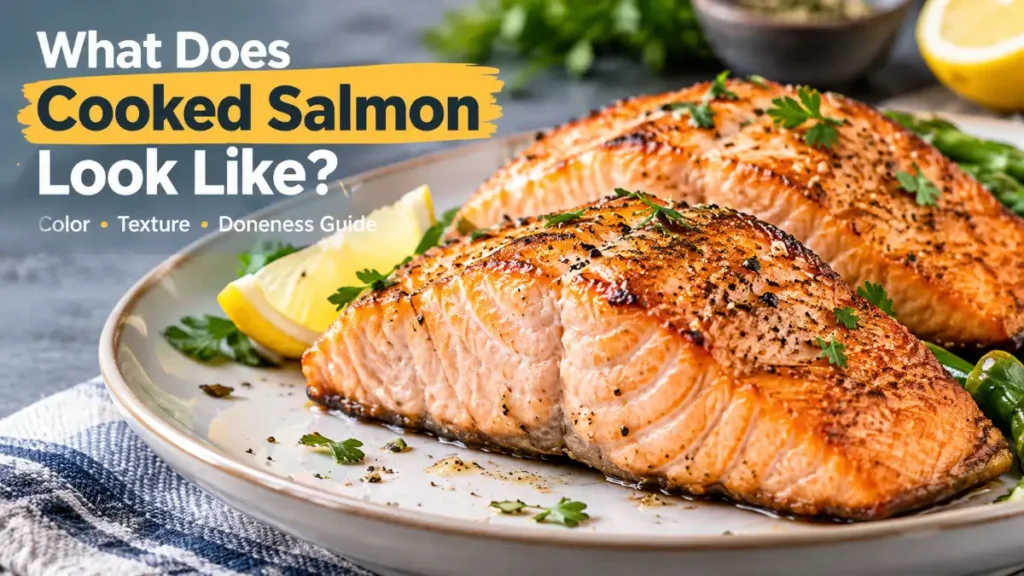
Now what does cooked salmon picture like? Properly cooked salmon usually yields opaque pink, coral or orange meat that flakes easily into moist pieces. The center should no longer look raw and glassy like uncooked fish. But just because it appears appealing – colour cannot determine food safety.
At home, you are taught to cook it to an internal temperature of 145°F (63°C) according the FDA. The most foolproof way to ensure that you are reading the deepest part of the fish accurately is with a food thermometer.
In this guide, I outline how to distinguish raw salmon vs cooked salmon and fish that is overcooked with some you can use super baseline methods of checking on doneness without halting dinner.
What Should the Center of Cooked Salmon Look Like
The center of salmon tells you more than its seared crustomium.Salmon changes in appearance and texture when it cooks. The flesh becomes more opaque, the muscle layers are easier to peel apart and it gets firmer.Recognize these four important signs
1. The flesh becomes opaque
Raw salmon often has a glossy, translucent appearance.
As it cooks, the flesh becomes increasingly opaque. The interior generally looks less shiny and more uniformly colored.
However, different salmon varieties retain different shades of pink, coral, and orange.
A rich color does not automatically mean the fish is raw.
2. The flesh separates into natural flakes
Cooked salmon has visible muscle layers.
When you gently press the thickest part with a clean fork, those layers should separate relatively easily.
Look for distinct flakes rather than a center that remains unusually resistant or jelly-like.
3. The texture becomes firmer
A cooked fillet should hold together when lifted with a spatula.
However, it should still feel tender when gently separated.
Very dry, tough, or chalky flesh often indicates that the fish has received more heat than necessary.
4. The center reaches the recommended temperature
The final check is the most important.
145°F (63°C)
Recommended minimum internal temperature for salmon
Check the thickest portion with a food thermometer.
According to the USDA, fish should reach this temperature before removal from the heat source.
A fillet can look cooked on the outside while its thickest section remains below this temperature.
Therefore, never judge doneness entirely by the surface.
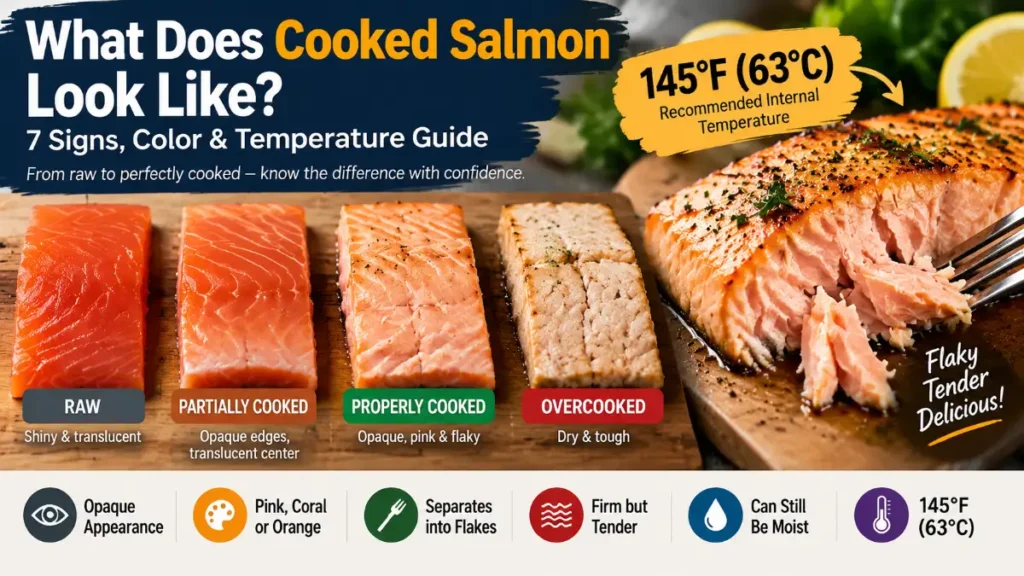
Raw vs. Cooked vs. Overcooked Salmon: A Visual Comparison
The clearest way to recognize doneness is to compare the appearance and texture at different stages.
This salmon doneness chart summarizes the practical differences.
| Stage | Appearance | Texture | What to do |
| Raw | Usually shiny and translucent | Smooth, soft flesh | Cook before serving under standard U.S. guidance |
| Partially cooked | Opaque edges, potentially translucent center | Uneven firmness | Continue cooking if below 145°F |
| Properly cooked | Generally opaque pink or orange flesh | Tender, moist flakes | Confirm 145°F and serve |
| Overcooked | May appear pale, dry, or shrunken | Tough, crumbly, or chalky | Remove from heat; avoid further drying |
Important: These visual descriptions illustrate texture and appearance. They cannot replace a thermometer reading.
The biggest difference between raw and cooked salmon
Raw salmon usually has a smoother, more translucent appearance.
Cooked salmon typically has more distinct flakes and a firmer, opaque interior.
On the other hand, overcooked salmon may become dry and break apart too easily.
These differences explain why a combination of texture, color, and temperature is more useful than relying on a single visual clue.
What Does Cooked Salmon Look Like Cooked Salmon Color: Should It Be Pink, White, or Orange?
Salmon does not need to turn completely white.
In fact, many varieties retain a recognizable pink or orange color after cooking.
The color varies with species, diet, and other factors. Pigments such as astaxanthin contribute to the flesh’s familiar appearance.
Can cooked salmon still be pink inside?
Yes.
A cooked salmon fillet may remain noticeably pink or orange, depending on the variety.
For example, sockeye salmon often has a deeper reddish-orange appearance than some other salmon varieties.
Therefore, comparing every fillet with a single reference color can be misleading.
Focus on opacity and the actual internal temperature rather than trying to achieve one particular shade.
Does a darker center mean the fish is raw?
Not necessarily.
A darker center might reflect the salmon’s natural pigmentation. However, a center that also looks translucent or glassy may indicate incomplete cooking.
Check the thickest portion with a thermometer.
If it reads below 145°F, continue cooking according to standard U.S. consumer guidance.
Should the outside be golden brown?
That depends on the cooking method.
Pan-seared and grilled salmon may develop a golden crust.
Baked salmon might brown lightly, while poached salmon generally remains pale.
A browned surface indicates changes to the exterior, not necessarily safe cooking throughout the fish.
The Most Reliable Way to Tell If Salmon Is Cooked
If you frequently prepare fish, a food thermometer is an especially useful kitchen tool.
It removes much of the uncertainty associated with cooking time, appearance, and fillet thickness.
Step 1: Find the thickest section
Look for the deepest part of the fillet.
The thin tail end may finish cooking before the thicker middle.
Consequently, checking only the tail can lead to an inaccurate conclusion about the entire piece.
Step 2: Position the thermometer correctly
Insert the probe into the center of the thickest portion.
For a thin fillet, insert it horizontally from the side so that the thermometer’s sensing area reaches the center.
Avoid touching the pan, baking tray, or bones.
Follow the manufacturer’s instructions concerning insertion depth.
Step 3: Read the temperature
Wait for the thermometer to produce a stable reading according to its instructions.
145°F or higher
The recommended cooking temperature has been reached at the measurement point.
Below 145°F
Continue cooking under standard U.S. food-safety guidance and check again.
For irregularly shaped portions, check additional thick areas.
If you are cooking several fillets, test each piece because they may reach the target temperature at different times.
Step 4: Remove the salmon from the heat
Once the fish reaches the recommended temperature, remove it from the heat to limit additional cooking.
Serve it promptly using clean utensils and a clean plate.
You do not need to continue heating solely to eliminate its natural pink color.
The Fork Test: Checking Salmon Without a Thermometer
Perhaps you do not have a food thermometer available.
The FDA provides visual guidance for checking finfish: the flesh should be opaque and separate easily with a fork.
Here is how to perform a basic fork test.
- Find the thickest section of the fillet.
- Insert a clean fork gently into the flesh.
- Apply light pressure.
- Observe whether the natural layers separate.
- Look for a predominantly opaque interior rather than a glassy center.
If the flesh appears translucent and resists flaking, continue cooking.
However, the fork test cannot tell you the exact internal temperature.
A thermometer remains preferable whenever one is available.
What should salmon texture feel like when done?
The flesh should separate into recognizable flakes without requiring excessive force.
It should not feel raw and jelly-like, nor should it become excessively tough or crumbly.
Remember that different salmon varieties have different fat levels and natural textures.
For this reason, there is no single texture that every cooked fillet will match perfectly.
Undercooked Salmon: The Warning Signs You Should Recognize
An undercooked center can be easy to overlook, especially when the exterior looks golden and appetizing.
Imagine a thick fillet that has developed a crust in a hot skillet.
The outside appears ready, but the middle still looks translucent.
This contrast suggests that the center may need more cooking.
Common clues include:
- A noticeably glassy interior.
- A center that differs sharply from the opaque edges.
- Flesh that resists separating into flakes.
- A temperature below the recommended 145°F.
These are reasons to check or continue cooking, rather than proof of safety or danger based on appearance alone.
What if the outside is cooked but the center is not?
Reduce the heat and continue cooking more gently.
If you are using an oven, return the fillet to the oven until it reaches the recommended temperature.
If you are pan-searing, lowering the heat can help prevent additional surface browning while the center finishes.
Check the temperature again before serving.
Do not assume that covering the fish or allowing it to rest automatically makes an undercooked center safe.
Overcooked Salmon: What Happens When You Cook It Too Long?
Salmon gradually loses moisture as it cooks.
When exposed to excessive heat, the flesh can become drier and firmer than intended.
An overcooked fillet may have a chalky interior, crumbly edges, and an unusually tough texture.
Common signs of overcooking
- Dry or shrunken flesh.
- A firm, rubbery texture.
- Flakes that crumble instead of separating into moist pieces.
- A surface that looks excessively dry or browned.
These characteristics indicate a quality problem, not necessarily a food-safety problem.
Salmon can be safely cooked yet unpleasantly dry.
Can dry salmon be rescued?
You cannot fully restore the moisture that cooking has removed.
However, you can improve the eating experience by adding a sauce or incorporating the fish into another dish.
For example, try flaking it into pasta, rice bowls, or a salad.
A little lemon butter, olive oil, or yogurt-based sauce may also make the fish more enjoyable.
Avoid cooking it further unless the internal temperature still needs to reach the recommended minimum.
White Stuff on Cooked Salmon: Is It Normal?
You may notice white patches or a creamy substance appearing on salmon during cooking.
This is commonly albumin, a protein that becomes visible as heat changes the fish’s protein structure.
Albumin itself is normal and edible. Its appearance does not automatically indicate spoilage.
Does white albumin mean the salmon is overcooked?
Not always.
The amount can vary with the cooking method, heat, and moisture loss.
More albumin may accompany prolonged or high-heat cooking, but it can also appear on properly cooked salmon.
Therefore, do not use white patches as a doneness test.
Check the internal temperature instead.
Can you remove the white substance?
Yes.
If you dislike its appearance, gently remove it from the cooked surface with a clean utensil.
You do not need to remove it for safety simply because it is visible.
Does Salmon Look Different When Baked, Grilled, or Pan-Seared?
The exterior can change considerably depending on the cooking method.
However, the same internal food-safety guidance applies.
| Method | Typical appearance | What to watch |
| Baking | Opaque flesh with little or moderate browning | Thick sections that need longer |
| Pan-searing | Golden crust, especially on the skin | A center that lags behind the exterior |
| Grilling | Browned areas and grill marks | Fast surface browning |
| Poaching | Pale, smooth exterior | Doneness without a crust |
| Air-frying | Browning and occasionally crisp edges | Thin ends that dry out |
Read More: St. Christopher
Why does cooking time vary so much?
The thickness of the fillet is particularly important.
A thin tail portion will generally finish before a thick center cut under similar conditions.
Starting temperature, equipment, and cooking method also affect the result.
Consequently, recipe times should serve as estimates rather than guarantees.
Begin checking near the expected finishing time and use the actual internal temperature to decide when to stop.
Don’t Confuse Doneness With Spoilage
A fillet can reach 145°F and still be unsuitable to eat if it was spoiled or handled improperly beforehand.
Cooking temperature and seafood freshness are different questions.
The FDA warns against eating seafood that has sour, rancid, or ammonia-like odors. It also notes that color alone is not a reliable freshness indicator.
Do not rely on the absence of a bad smell to prove that fish is safe, either.
If salmon has been stored improperly, do not assume cooking it will make it acceptable.
Safe handling matters, too
Follow these basic practices:
- Keep raw salmon separate from ready-to-eat foods.
- Wash hands, utensils, and preparation surfaces after contact with raw fish.
- Refrigerate seafood promptly.
- Keep the refrigerator at 40°F (4°C) or below.
- Avoid leaving cooked salmon at room temperature for extended periods.
According to FDA guidance, perishable foods should be refrigerated within two hours, or within one hour when temperatures exceed 90°F (32°C).
A Final Salmon Doneness Checklist
Before serving, review these simple questions.
Before you serve
0 of 5
Did I check the thickest section with a food thermometer?
Did the internal temperature reach 145°F (63°C)?
Is the interior generally opaque rather than glassy?
Does the flesh separate easily into flakes?
Was the salmon stored and handled safely?
Temperature is the essential doneness check. Safe storage and handling must also be confirmed.Reset checklist
Frequently Asked Questions
1 How the inside of cooked salmon looks like?
Raw salmon flesh is semi-translucent, while cooked you are expecting opaque pink, coral or orange color flaking apart. You should not see any glassy/raw looking bit (similar to the centre of a piece of cooked fish) Verify internal temp reaches 145°
2 If salmon cooks thoroughly, what makes it appear pink?
Yes. This is the usual bright pink / orange color of salmon when cooked. If the pink centre is not loose then this does not mean undercooked. Ignore color, Check internal temperature instead.
3. How can I tell if salmon is cooked without a thermometer?
There is some give to it, a bit of artistic licenceBecause we want it to be opaque flesh that flakes with the fork. These are established indicators and you have visual aspects; but they cannot give a precise temperature. We recommend instead a food temperature guide.
4 What is a safe internal temperature for salmon?
Finfish should be cooked to a minimum internal temperature of 145 °F (63°C) with the FDA and the USDA Measure in the thickest part with a properly placed food thermometer.
5. Why is my salmon cooked outside but raw in the middle?
It is hot outside, then inside. This can be slightly more noticeable in thick fillets or at high heat cooking. If you need to turn down the heat continue cooking, then stick in that middle thermometer.
6. Does cooked salmon need to be completely white?
Not to mention that one such pink as what is gown associated to salmon are pigments, and while they could become invisible by cooking; for all whether it appears if Salmonhpects did lie just shy of rare. Fully cooked meat, however, turns pale-pinkish at best (or more accurately: gray.
7. What are the white lines and white patches in cooked salmon?
Thin pale lines that delineate the divisions in muscle are a built-in aspect of every fish anatomy. Usually the white spots that form on meat during cooking are remnants of albumin – a normal protein. Neither is very good for replacing a temperature test.
8. Can I cook salmon directly from frozen?
You can absolutely cook straight from frozen, but you shouldn’t trust the cooking time in a recipe blindly because that will vary depending on whether your fish has already defrosted or if you’re cooking it still-frozen. Insert into the thickest part to ensure it reaches that temp at 145°F (63°C).
Maybe you seasoned it, marinated that salmon overnight or all around cooked it on a full-time date night within the thoughts.
9. How long does cooked salmon last in the refrigerator?
The US Department of Agriculture (USDA) gives guidelines as well, and recommends storing cooked fish in the fridge for three to four days. Store and reheat promptly to kill foodborne germs–keep at 40 °F or lower and beat leftovers in the microwave oven to a temperature of 165 °F (74°C). .
10 But then the logical question arises: is salmon correctly cooked or smells slightly odd?
Stay away from salmon which smells sour, rancid or like ammonia. Just the appearance of normality, or even a commercially acceptable cook to your fish is not an assurance spoiled fish otherwise rejected by most food vendors would be microbiologically safe.