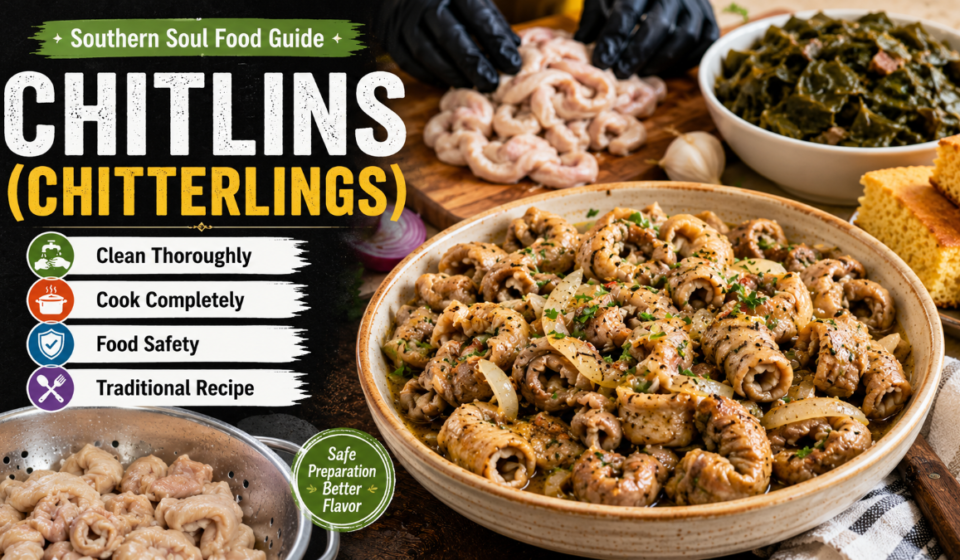

Chitlins-also known as chitterlings-are pork small intestines prepared in many Southern soul food households. When carefully cleaned and slowly simmered with vegetables and spices, they become tender, richly flavored, and worthy of a place beside greens, cornbread, beans, and other traditional sides.
The key to good chitterlings is patience: safe handling comes first, thorough cleaning comes second, and a low, slow cook creates the final texture and flavor.
What are chitlins made from?
Chitlins are the small intestines of a pig. They are a type of pork offal, or variety of meat, and have long appeared in cuisines around the world. In the American South, they are most often washed, simmered in seasoned liquid, and served soft with a peppery broth.
The name chitlins is a regional shortening of chitterlings. While the words are often used interchangeably, “chitlins” is especially common in Southern and African American culinary traditions.
A meaningful Southern food tradition
For many families, chitterlings are closely associated with holiday dinners, Sunday meals, and recipes passed down through generations. Their place in Southern soul food reflects the ingenuity and culinary skill of African Americans who transformed overlooked ingredients into sustaining, flavorful dishes.
That history is part of why this dish should be prepared with care. Every family may season the pot differently, but the foundations remain the same: clean ingredients, a seasoned broth, and enough time for the meat to become tender.
Read More: Purple Flowers
Buy and thaw chitlins safely
Chitlins are commonly sold frozen, pre-cleaned, or fully cooked. Pre-cleaned packages can reduce prep time, but they should still be inspected before cooking.
Use these handling practices:
- Thaw frozen raw chitlins in the refrigerator, not on the countertop.
- Keep the package in a bowl or tray to catch leaks.
- Store it below ready-to-eat food to avoid drips contaminating other items.
- Use thawed raw chitterlings within two days.
- Keep children, toys, bottles, pacifiers, and pet dishes away from the prep area.
Raw chitterlings can spread harmful germs to hands and kitchen surfaces. Treat them with the same caution you would use for raw poultry, while recognizing that the cleaning process requires extra attention.
How to clean chitlins safely
Cleaning is the longest part of making this dish. It is also the step where good sanitation matters most.
Start with a short boil
Before cleaning raw chitlins, boil them in water for at least five minutes. This helps reduce the germs that may spread to your hands, sink, counters, and kitchen tools while you inspect them. Drain and let them cool until safe to handle.
Do not mistake this brief boil for the final cooking stage. The chitterlings still need to be cleaned and simmered until tender.
Inspect and trim the pieces
Place the cooled intestines in a large bowl of clean water. Work through them individually, looking for any remaining debris, excess fat, membrane, hair, or inedible material.
Use kitchen scissors or a small knife to open thicker pieces if necessary. Remove what does not belong, then place the cleaned piece in a separate clean bowl. Working in small batches makes it easier to stay organized.
Rinse without splashing
Rinse the pieces in fresh, cool water several times, changing the water between rinses. Some cooks add a little vinegar or baking soda during a soak, but these ingredients are for flavor or odor preference-not food safety.
Avoid spraying water around the sink. Splashes can carry contamination to nearby countertops, utensils, and appliances.
Sanitize everything afterward
Once cleaning is complete, wash your hands thoroughly with soap and warm water for at least 20 seconds. Clean and sanitize the sink, faucet, counter, utensils, refrigerator handles, and anything touched during preparation.
A bleach solution made with 1 tablespoon of bleach per 1 gallon of water can be used on surfaces exposed to raw chitterlings or their juices. Let the solution sit for several minutes, rinse with plain water, and air-dry or dry with paper towels.
How to cook chitlins until tender
The best way to cook chitterlings is to simmer them gently in a large pot. High heat may make the broth boil away too quickly, while a steady simmer gives the pieces time to soften and absorb flavor.
Ingredients for a classic pot
- 5 pounds cleaned chitlins
- 1 large onion, chopped
- 1 bell pepper, chopped
- 2 celery stalks, chopped
- 3 garlic cloves, minced
- 1 or 2 bay leaves
- Black pepper, to taste
- Red pepper flakes, cayenne, or hot sauce, optional
- Cider vinegar, to taste
- Salt, seasoning blend, or bouillon, as needed
- Water or unsalted broth
Cooking method
- Add the cleaned chitterlings to a large stockpot and cover with water or broth.
- Add the onion, bell pepper, celery, garlic, bay leaves, and black pepper.
- Bring the liquid to a boil, then immediately reduce it to a gentle simmer.
- Cook partially covered for several hours, adding more liquid if needed.
- Taste only after the pieces are fully cooked and tender, then adjust salt, pepper, hot sauce, and vinegar.
- Remove the bay leaves and serve hot with a little broth.
Chitterlings should be well cooked and tender before serving. A long simmer is what gives them their characteristic texture.
Chitlins seasoning ideas
There is room for personal taste in the seasoning pot. Start with a balanced base, then decide whether you want the finished dish smoky, spicy, tangy, or mild.
| Flavor style | Seasoning approach |
| Classic Southern | Onion, celery, bell pepper, garlic, black pepper, bay leaf |
| Vinegar-forward | Cider vinegar, hot pepper vinegar, black pepper, red pepper flakes |
| Smoky | Smoked turkey, ham hock, smoked paprika, garlic |
| Spicy | Cayenne, hot sauce, red pepper flakes, fresh hot peppers |
| Mild and savory | Onion, garlic, bay leaf, celery, modest salt and pepper |
Add vinegar gradually near the end. Too much too early can dominate the broth and make it difficult to balance the other flavors.
What goes well with chitterlings?
Chitlins are usually served as part of a full soul food or Southern-style meal. They pair especially well with foods that absorb or contrast with their seasoned broth.
Popular serving ideas include:
- Cornbread, hoe cakes, or dinner rolls
- Collard greens, mustard greens, or cabbage
- Black-eyed peas, pinto beans, or field peas
- White rice or dirty rice
- Macaroni and cheese
- Candied yams or sweet potatoes
- Pepper vinegar, hot sauce, or chow chow
A simple plate of chitterlings, greens, cornbread, and beans provides a satisfying mix of rich, tangy, earthy, and spicy flavors.
Can you fry cooked chitlins?
Yes. Fried chitterlings are best made from pieces that have already been simmered until fully cooked and tender. Drain them well, pat them dry carefully, season lightly, and fry in small batches until the edges become crisp.
Frying should add texture, not replace the long simmer. Raw or undercooked intestines should never be fried briefly and treated as finished.
How to store leftover chitterlings
Cool leftovers promptly and place them in shallow, covered containers. Refrigerate within two hours of cooking, if the temperature is above 90°F, refrigerate within one hour.fsis.usda+1
Use refrigerated leftovers within three to four days. Reheat only the portion you plan to eat, bringing it to 165°F before serving. Freeze extra portions if you will not use them within that time.
Frequently asked questions
Are chitlins already cooked when you buy them frozen?
Usually not. Most frozen packages contain raw or partially prepared pork chitterlings that must be handled, cleaned, and cooked according to the package directions. Even pre-cleaned packages should be inspected and cooked thoroughly. Read the label carefully: fully cooked products will state that they are cooked, while raw products must be treated as raw pork throughout preparation.
What is the difference between chitlins and chitterlings?
There is no meaningful ingredient difference. “Chitterlings” is the formal name for pig intestines prepared as food, while “chitlins” is a common shortened form used especially in Southern cooking. Both terms generally refer to the same dish. The spelling and pronunciation often depend on region, family tradition, and the style of cooking being discussed.
Why should raw chitlins be boiled before cleaning?
A short initial boil helps reduce the germs that can spread from raw chitterlings to hands, sinks, countertops, utensils, and kitchen objects during cleaning. It does not fully cook the dish, so the pieces still need inspection, rinsing, sanitation of the kitchen, and a longer simmer until tender. This step is especially important when children are present in the home
Can I clean chitlins with vinegar alone?
No. Vinegar may be used for its flavor or to freshen the aroma during rinsing, but it is not a replacement for safe handling and cooking. Carefully inspect the pieces, remove debris and excess fat, rinse with fresh water, sanitize surfaces after raw handling, and cook the finished dish until fully done. Vinegar belongs in the flavor profile, not in place of food-safety steps.
How do I make chitlins less smelly while cooking?
Ventilate the kitchen, keep the pot partly covered, and simmer the dish with aromatic ingredients such as onion, celery, garlic, bay leaves, black pepper, and vinegar. Cleaning carefully and avoiding splashing also helps keep odor from spreading around the kitchen. The aroma is naturally strong, but a well-seasoned broth and good ventilation make the cooking process more manageable.
How long should chitterlings simmer?
Most batches take several hours of gentle simmering, though exact timing depends on the quantity, pot, and desired texture. The best test is tenderness: a cooked piece should be easy to chew and no longer rubbery. Keep enough liquid in the pot, maintain a low simmer, and test a small piece occasionally rather than relying on a fixed cooking time.
Are chitlins healthy?
Chitterlings provide protein but are also a rich pork product and may be high in fat and cholesterol, depending on trimming and preparation. Portion size, added salt, bouillon, smoked meat, and side dishes all affect the nutritional profile of the meal. People following medically prescribed diets should consider their individual dietary needs and consult an appropriate healthcare professional when necessary.
Can I prepare chitlins the day before serving?
Yes. Cooking them a day ahead can make serving easier and gives the seasonings time to settle into the broth. Refrigerate the cooked dish in shallow containers within two hours, then reheat it thoroughly to 165°F before serving. Reheat only what you expect to eat, rather than repeatedly warming and cooling the entire pot.
Can cooked chitterlings be frozen?
Yes. Freeze cooked portions in airtight containers or freezer bags after they have cooled promptly in the refrigerator. Label the containers with the date and use them within a few months for best quality. Thaw frozen leftovers in the refrigerator, then reheat them thoroughly. Freezing is a useful option when a large batch will not be eaten within three to four days.
What should I do if leftover chitlins were left out overnight?
Discard them. Perishable cooked food left at room temperature for more than two hours may become unsafe, even if it appears normal or smells fine. Reheating cannot always make improperly stored food safe. If the room temperature was above 90°F, the safe limit is only one hour.