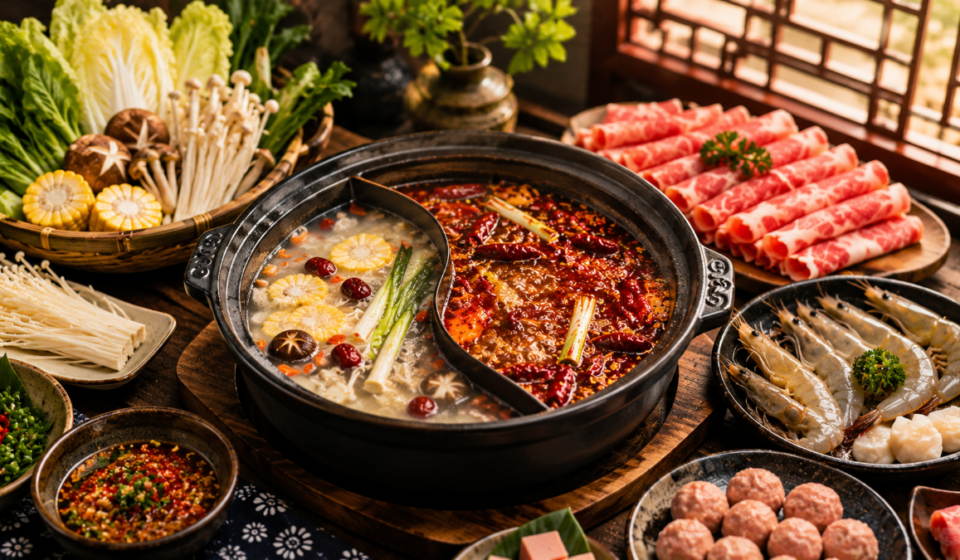

Picture a table where nobody’s meal arrives already cooked. Instead, a pot of simmering broth sits at the center, and every diner drops in their own choice of raw beef, tofu, mushrooms, and noodles, fishing each piece out the moment it’s ready. That’s hotpot, or huǒguō (火锅) – less a single recipe than a shared cooking process that different Chinese regions have shaped into distinct culinary traditions .[web:3]
Most guides to this dish either drown beginners in regional trivia or skip straight to a shopping list without explaining why the choices matter. This one works the other way around: it starts with how to decide what kind of hotpot suits you, then walks through buying, cooking, and eating it with the practical detail a first-timer actually needs.
Why Hotpot Feels Different From Other Meals
Nearly every other cuisine separates cooking from eating – a chef finishes the dish, then it’s served. Hotpot collapses that boundary. The “cooking” happens continuously at the table, in full view, with every diner controlling their own pace and doneness. That single structural difference explains almost everything else about the meal: why it takes longer than a normal dinner, why it works so well for groups, and why the broth itself becomes almost as important as any individual ingredient, since everything passes through it before reaching your plate.
Chinese hotpot specifically refers to the regional cuisines built on top of that shared structure. The format stays constant, what changes from Beijing to Chengdu to Guangzhou is the broth’s character, the proteins considered essential, and the sauce that finishes each bite.
A Short, Honest Look at Where Hotpot Came From
Origin stories about hotpot tend to get flattened into confident timelines online, but the underlying evidence is thinner than most retellings suggest. Bronze vessels used by nobility during the Shang and Zhou dynasties (roughly 1600–256 BCE), along with copper pots documented in the Three Kingdoms period (220–280 CE) for cooking sliced meat in individual portions, show that cooking in a shared or personal vessel has ancient roots in China – but they don’t prove an unbroken line to the dish served today [web:20][web:28].
The most colorful legend involves Mongol horsemen, supposedly including troops under Genghis Khan and Kublai Khan, cooking sliced meat in boiling water inside their own helmets when no proper pot was available. It’s a memorable image, and it shows up constantly in food writing, but the documentation behind it is thin enough that it’s more accurately described as folklore than settled history [web:22][web:27].
A more specific and frequently repeated account traces Chongqing’s fiery, offal-based style to river and dock laborers working the Yangtze and Jialing waterways during the Qing dynasty (1644–1911), who are said to have simmered inexpensive meat scraps in a pot loaded with chili and Sichuan peppercorn [web:25]. Treat this as the most common explanation you’ll encounter for that particular style, not a verified historical fact.
Matching Your Spice Tolerance to a Regional Style
Before buying ingredients, it helps to know which regional tradition actually fits your palate. Use this as a starting filter, then read the fuller descriptions below for the style that matches.
| Your priority | Regional match | Broth intensity |
| Can’t handle much spice at all | Beijing or Cantonese | Low |
| Want seafood over red meat | Cantonese/Guangdong | Low |
| Like a savory kick without heat | Yunnan | Low, umami-driven |
| Want beef quality to be the star | Chaoshan | Low, beef-forward |
| Enjoy chili but not numbing spice | Chengdu, ordered on the milder side | Medium |
| Want the numbing mala sensation and real heat | Chengdu (aromatic) or Chongqing (intense) | Medium to high |
Beijing: The Understated Original
Old-school Beijing hotpot uses a charcoal-heated copper pot and a nearly bare broth – just water, ginger, scallion, and occasionally dried shrimp [web:38]. The point isn’t the broth at all, it’s the quality of paper-thin mutton slices, dipped afterward in a rich sesame-based sauce often mixed with fermented bean curd [web:36][web:18]. If you want to understand hotpot’s roots in ingredient-first simplicity rather than heavy seasoning, this is the style to try.
Read More: Chitlins
Cantonese: Built Around the Catch
Guangdong-style hotpot treats the broth as a supporting player. A light chicken or pork bone stock stays deliberately understated so it never competes with fresh seafood – squid, crab, shrimp, and fish balls take center stage, finished with soy-based or light chili dips rather than anything sesame-heavy [web:36][web:38].
Chaoshan: One Ingredient, Done Exceptionally
Chaoshan beef hotpot, from the Chaozhou area of Guangdong, narrows its focus almost entirely onto beef quality. Extremely thin cuts cook for mere seconds in a mild beef bone broth until safely done [web:34][web:40]. Diners who’ve tried Japanese shabu-shabu will notice a family resemblance in the light broth and quick cook time, though Chaoshan hotpot follows its own conventions around cuts and dipping and shouldn’t be treated as interchangeable with it.
Yunnan: Spice-Free Depth of Flavor
Yunnan’s version skips chili almost entirely, instead building a broth from the region’s abundant wild and cultivated mushrooms, sometimes rounded out with herbs or a sour tomato edge [web:38][web:34]. It’s proof that hotpot doesn’t need heat to deliver an intense, memorable flavor.
Chengdu: Heat With Room to Breathe
Chengdu’s take on mala hotpot generally uses a lighter oil mix than its Chongqing neighbor, blending vegetable oil with beef tallow and sometimes adding fermented rice or rock sugar for a rounder finish [web:64]. Restaurants commonly offer a divided yuanyang pot so diners can split time between the spicy and mild sides, and the meal typically comes with an elaborate, build-your-own sesame sauce [web:62]. Chengdu’s heat tends to run a notch below Chongqing’s, though this varies enough by restaurant that it’s a tendency rather than a rule.
Chongqing: Where the Heat Peaks
Chongqing hotpot leans hardest into beef tallow, producing a thick, oily, deep-red broth built for maximum spice and numbing intensity [web:52]. Offal defines the ingredient list here more than anywhere else – beef tripe (毛肚), duck blood (鸭血), and huanghou (黄喉), a crisp ingredient made from beef or pork blood-vessel tissue commonly associated with the aorta – a legacy popularly linked to laborers who cooked with whatever cheap cuts were available [web:25]. Traditional Chongqing service favors a single, undivided pot, though split pots do show up at some restaurants [web:62].
Across both Sichuan-region styles, remember that oil blends, spice levels, and pot formats vary restaurant to restaurant – the Chengdu/Chongqing split is a useful generalization, not a strict boundary.
A Few More Traditions Worth Knowing
- Guizhou favors a sour, fermented-tomato broth with real tang.
- Hainan builds a sweet, coconut-milk broth around chicken.
- Jiangsu-Zhejiang simmers chrysanthemum petals in a light chicken stock, a tradition tied to Hangzhou and Suzhou.
Assembling Your Own Hotpot Shopping List
Rather than listing every possible ingredient in one block, build your cart in this order – it mirrors how the pot actually fills up.
Starches first, since they anchor the meal: glass or vermicelli noodles, udon, ho fun, or wide sweet-potato starch noodles, plus optional dumplings, rice cakes, or luncheon meat.
Then tofu and bean products, which hold their shape through long simmering: firm, silken, or frozen tofu (each absorbs broth differently), tofu skin (dòufǔ pí), bean curd sticks (yuba), and konjac for a lighter, jelly-like texture.
Then vegetables and fungi: bok choy, chrysanthemum greens (tong hao), napa cabbage, or ong choy for leafy greens, enoki, shiitake, or oyster mushrooms, lotus root, daikon, potatoes, and corn for something heartier.
Then protein, added last since it’s usually the star: very thinly sliced beef and lamb, pork belly, marinated meats, and – if you’re leaning into a Sichuan-style spread – beef tripe and huanghou. Fish balls, shrimp balls, fish tofu (a fish-based product with a tofu-like texture, not actual tofu), and whole shrimp, squid, scallops, or shellfish round out the seafood side. Quail eggs make a good small addition for variety.
If a Chinese specialty ingredient is out of reach, a few workable stand-ins exist: tahini approximates sesame paste reasonably well (add a touch of sesame oil to compensate for the milder roast), and udon or standard rice noodles substitute fine for glass noodles or ho fun. Sichuan peppercorn is the exception – nothing else replicates its specific numbing sensation, so treat any substitute as an approximation.
How Much to Buy, by Group Size
| Group size | Protein | Produce (veg + mushroom) | Tofu/bean | Starch | Broth needed |
| Two people | 0.5–0.75 lb across 1–2 kinds | 3–4 items | 1 kind | 1 item | 1.5–2 quarts |
| Four people | 1.5–2 lb across 2 kinds | 4–6 items | 1–2 kinds | 2 items | 3–4 quarts |
| Six people | 2.5–3 lb across 2–3 kinds | 6–8 items | 2 kinds | 2–3 items | 5–6 quarts |
Treat these as loose starting points. A group that eats slowly over two hours will go through more broth and refills than one that finishes quickly, regardless of headcount.
The Science of a Good Broth
Every hotpot broth, regardless of region, balances the same handful of variables: fat content, aromatic intensity, and how much seasoning happens in the pot versus in the dipping sauce. Clear broths (Beijing, Cantonese) push almost all the flavor work onto the sauce. Mala broths (Sichuan-region) do the opposite, front-loading intense seasoning directly into the liquid.
Building a mala broth from scratch follows a fairly consistent sequence: melt beef tallow or a neutral oil, bloom doubanjiang in it until the oil turns red, add garlic and ginger, then toast dried chilies, Sichuan peppercorns, star anise, and cassia bark until fragrant. Fermented black beans and rock sugar go in next, followed by stock, then a 20–45 minute simmer to let everything infuse [web:65][web:9]. It’s a longer process than most weeknight cooking, which is exactly why store-bought hotpot base pastes remain common even within China – they compress that entire sequence into a single jar, and they’re a perfectly reasonable shortcut for a first attempt [web:7].
Building a Sauce From Scratch
Rather than memorizing one “correct” sauce, it helps to think of hotpot dips as a small number of building blocks combined differently by region.
| Region | Base | Typical add-ins |
| Beijing | Sesame paste + water | Fermented bean curd, leek flower sauce, soy sauce, sesame oil |
| Chongqing | Sesame oil | Minced garlic – deliberately simple, meant to cool the palate rather than add flavor |
| Chengdu | Sesame paste | Garlic, scallion, cilantro, fermented tofu, crushed peanut, a touch of sugar |
| Cantonese | Soy sauce | Scallion, chili, or a peanut-based variation |
Mix small test batches before committing to a full bowl – sauce proportions are easy to adjust but hard to fix once a bowl is overloaded with one ingredient.
Kitchen Setup and Safety Checklist
Before anyone sits down, confirm you have the essentials: a pot capable of a steady simmer (a divided yuanyang pot if you want two broths), a portable burner, a ladle plus small strainers for retrieval, separate tongs or chopsticks for handling raw food, individual sauce bowls, and trays to keep raw ingredients organized by type.
Set-up matters as much as equipment. Keep raw seafood on its own tray, apart from vegetables and anything already cooked. Slice proteins thin and plate them separately by type. Bring the broth to a full boil before the first ingredients go in, and don’t let raw-food utensils cross paths with the ones people eat from.
On the safety side, cooking time by itself is a weak indicator of doneness – it depends on how thick a piece is, how hot the broth runs, and how many other items just went in and cooled things down. US federal guidance from FoodSafety.gov and the USDA Food Safety and Inspection Service sets these minimum internal temperatures, checked with a thermometer [web:44][web:61]:
- Whole cuts of beef, pork, lamb, or veal: 145°F (63°C), rested 3 minutes.
- Ground meat: 160°F (71°C).
- Poultry, any cut: 165°F (74°C).
- Fish: 145°F (63°C).
- Shellfish such as shrimp, crab, and scallops: cooked until opaque and at the appropriate internal temperature, clams, mussels, and oysters until the shells open, discarding any that stay shut [web:51].
These figures reflect US standards specifically, so check local guidance if you’re cooking under a different regulatory framework. Thin hotpot slices generally hit safe temperatures fast, but “fast” isn’t a fixed number of seconds – when in doubt on a thicker piece, a thermometer beats guessing. Round out the safety basics by keeping the broth at a steady boil rather than overloading it, refrigerating leftovers promptly, and never returning food to the shared pot once it’s touched your bowl or mouth.
Cooking Times You Can Trust
| Ingredient | How it behaves in the pot |
| Thin-sliced beef or lamb | Done in a quick swish, seconds rather than minutes |
| Delicate greens | Wilts almost instantly – add last |
| Mushrooms | Needs a few minutes to soften fully |
| Tofu (any type) | Add early so it has time to absorb broth flavor |
| Lotus root, daikon | Slow to soften – add early and be patient |
| Noodles | Add last, follow package timing |
| Shrimp, fish, shellfish | Fully cook through, timing shifts with size and cut |
Dropping in food a little at a time, rather than emptying a whole tray in one go, keeps the broth from cooling and gives everything a better shot at cooking evenly.
Manners at the Table
Hotpot’s shared format comes with a few unwritten rules worth knowing before your first meal. Cooking a few pieces for a guest unfamiliar with the process is a common and welcome gesture. Once food has touched your bowl or mouth, it shouldn’t go back into the communal pot – this is a hygiene habit as much as an etiquette one. Feeding the pot gradually rather than in one large dump also benefits everyone at the table, not just the person doing the adding. And if spice tolerances clash, requesting a split pot is the standard, low-friction solution rather than anyone compromising on heat.
Cost and Effort: Home vs Restaurant
| What matters to you | Cooking at home | Eating out |
| Total cost | Usually cheaper per person | Usually pricier per person |
| Ingredient range | Whatever you can source | Typically broader |
| Spice/broth control | Complete | Limited to menu options |
| Sauce personalization | Total freedom | Often a shared self-serve bar |
| Prep workload | Shopping, slicing, setup | None |
| Food-safety oversight | Falls on you | Shared with the kitchen |
Neither option is objectively better – the right choice depends on whether you’re optimizing for cost and customization or convenience and variety.
How Hotpot Compares to Other Shared Meals
| Meal | Where it’s from | What you cook in | What sets it apart |
| Chinese hotpot | China | A seasoned, often bold broth | Broth can range from delicate to intensely spiced, some diners drink it as soup once the solids are gone |
| Shabu-shabu | Japan | A light kombu stock | Broth stays neutral, flavor comes almost entirely from the dip |
| Sukiyaki | Japan | A sweet soy-based liquid | Often finished with a raw egg dip |
| Jeongol | Korea | A seasoned communal stock | Similar table-cooking structure with its own spice character |
| Fondue | Swiss tradition | Oil, melted cheese, or chocolate | Not broth-based, and not typically drunk afterward |
A Meal Worth Learning the Rules For
Hotpot rewards a little upfront knowledge more than most dishes do – knowing which regional style matches your spice tolerance, how to shop for it in the right order, and how to cook it safely turns what could be an overwhelming table full of raw ingredients into one of the more genuinely enjoyable ways to eat with a group. Start with a style on the milder end if you’re unsure, keep a thermometer nearby for anything thick, and let the broth do double duty as both cooking liquid and, eventually, the soup you finish the meal with.
Frequently Asked Questions
Do I need to pick one single hotpot style, or can I mix elements?
There’s no rule against it, especially at home. Many households borrow a Chengdu-style mala base but serve it with Cantonese-style seafood, or use a Beijing-style clear broth with a Sichuan-style sesame dip. Restaurants tend to stay more traditional to a single regional identity, but home cooking has no such obligation
Why does my homemade mala broth taste flat compared to a restaurant’s?
Restaurant broths often rely on long-simmered stock bases, aged doubanjiang, and sometimes a reused “old oil” base built up over repeated service, none of which are easy to replicate quickly at home. A store-bought hotpot base concentrate closes most of that gap for a home cook without the multi-hour process.
Is it rude to ask for a milder broth at a spicy hotpot restaurant?
No – requesting a divided pot or a lower spice tier is completely standard, and most restaurants that specialize in spicy regional styles expect a range of tolerances at any given table.
Can I reuse hotpot broth for a second meal?
Leftover broth can be reused if it’s refrigerated promptly and reheated to a full boil before the next use, but it thickens and gets saltier as more starch and protein cook in it, so it’s best treated as a one-meal base rather than a long-term stock.
What’s the biggest ingredient mistake beginners make?
Overbuying protein and underbuying vegetables. A hotpot spread that leans too heavily on meat gets monotonous and rich quickly, a wider mix of vegetables, mushrooms, and tofu balances the meal and stretches the broth’s flavor further.
Does the broth actually get more flavorful as the meal goes on?
Yes, within reason. Starch from noodles and proteins from meat and seafood gradually enrich the liquid, which is why many diners save a bowl of broth to drink near the end. That said, a broth left simmering too long with too much food in it can also turn overly salty or cloudy in an unpleasant way, so topping it up with fresh liquid partway through a long meal isn’t unusual.
How do I keep a divided pot’s two broths from mixing?
Most yuanyang pots use a metal divider that sits above the base and extends to the rim, which should keep the two sides separate as long as it’s seated correctly and you don’t overfill either side to the point of spilling over the partition
Is hotpot a good option for someone with common food allergies?
It can be, since diners choose and cook their own ingredients individually rather than eating a pre-mixed dish – but shared broth and shared utensils create real cross-contact risk for allergens like shellfish or peanuts, especially in sauces. Anyone with a serious allergy should ask specifically about broth and sauce ingredients rather than assuming a “cook your own” format is automatically safer.
What should I do if the broth runs low midway through a long meal?
Ask for a refill of the same broth base rather than switching to plain water, since diluting a seasoned broth with water flattens its flavor. Most restaurants will top up a broth on request, and at home, keeping extra pre-made stock or water with bouillon on hand solves the same problem.
Are there vegetarian or vegan hotpot options?
Yes. A mushroom-based broth like Yunnan’s translates well to a fully plant-based meal, and even mala bases can be made with vegetable oil instead of tallow. Pair either with tofu, vegetables, mushrooms, and plant-based noodles, and skip animal-derived dipping sauce ingredients like fermented bean curd made with dairy or fish-based sauces.
.